by rakesh | Sep 6, 2006 | World News
Teams are evaluating data on what might have caused a voltage spike in the fuel cell’s coolant pump that cools the fuel cell system. Mission
managers will hold a meeting at 1 p.m. EDT Wednesday to assess the
issue. There will be a news conference on NASA TV at the conclusion
of the meeting.
During STS-115, the astronauts will deliver and install a girder-like
structure, known as the P3/P4 truss aboard the station. The
35,000-pound piece includes a set of giant solar arrays, batteries
and associated electronics. The arrays eventually will double the
station’s power capability.
Atlantis’ crew, Commander Brent Jett, Pilot Chris Ferguson and mission
specialists Dan Burbank, Heide Stefanyshyn-Piper, Joe Tanner and
Steve MacLean, a Canadian Space Agency astronaut, remains at Kennedy Space Center.
by rakesh | Sep 6, 2006 | Business
Tata Motors has discussed the need for urgent action with insurance companies and the All India Surveyors Association for speedy survey and repair approvals. The guidelines for repairs and the survey, including the charges allowed, have already been circulated to all company dealers and authorised service centres.
Arrangements have been made for expeditious supply of spares. The company has received support from vendors and suppliers of lubricants, anti-rust treatment, car cleaning and refurbishing, branded accessories etc for special attention to cater to large volumes and special discounts of upto 25% on most of the treatments. Dealers have also been advised to offer 25% discount on repairs, not covered by insurance companies.
Additional manpower and dedicated teams have been deployed to attend to flood-affected vehicles on all seven days of a week for the next few months.
Of the about 1000 Tata Motors vehicles affected by the floods, approximately 700 have already been brought to the company’s dealers and authorised service centres, since August 17. Of these, about 150 vehicles have already been delivered back to customers after necessary repairs.
by rakesh | Sep 6, 2006 | Env & Geography
This was informed by the Vice Chairman of Narmada Valley Development Authority, Shri Uday Kumar Verma here in a high level meeting called to review progress of the Narmada Valley projects. Shri Verma said that Mann Project would irrigate about 19 thousand hectare annually. The Member (Engg.) Shri Virendra Kumar Pareekh informed that by the year 2010 the irrigation from Narmada Valley projects is estimated as much as 5.76 lack hectare.
Shri. Verma said that upto March 2006 the ongoing NVDA projects have created irrigation potential of 89640 hectares and all efforts would be done to achieve the yearly targets. He informed that NVDA. is concentrating on catchments area treatment, soil conservation practices and educating farmers in canal irrigation and cropping patterns. Based on geographical, and climatic conditions of the Project area separate plans would be made for each project and would be implemented involving local farmers. Vice Chairman informed that besides power and irrigation benefits, other issues like fisheries, water transport, Eco-tourism etc are being taken care of to exploit every possibilities of public welfare. Shri. Uday Kumar Verma informed that NVDA is working on a plan to extend irrigation facilities to the farmers of those 121 villages which lies in the periphery of Indira Sagar Reservoir. A special power line would be laid in these villages so the farmers could take the water to their fields using pumps.
by rakesh | Sep 6, 2006 | Env & Geography
Wednesday, September 06, 2006 11:18 IST Ministry of Science & Technology PARTIAL ECLIPSE OF THE MOON...
by rakesh | Sep 6, 2006 | Business
Elizabeth Barroso, now 24, began experiencing chest pains and difficulty breathing after using Ortho Evra(R) for only three weeks in 2004. She spent eight days in the hospital, where doctors treated her for blood clots in her lungs. Ms. Barroso had no prior history of such problems.
After being released, Ms. Barroso was prescribed blood-thinning medication for 10 months. She became pregnant in October 2004, but later suffered a miscarriage. When she later became pregnant in 2005, Ms. Barroso was forced to endure daily self-injections of blood thinners to prevent another miscarriage. Due to her injuries from Ortho Evra(R), all of Ms. Barroso’s future pregnancies will carry a risk of miscarriage and will require similar treatment.
“This young lady’s life was put in jeopardy by a company that made a harmful product,” says John David Hart of the Law Offices of John David Hart in Fort Worth, Texas. “And the tragic thing is the company continues to market and sell this product even today.”
The case is the latest of many against Johnson & Johnson, which earlier this year settled other cases involving Ortho Evra(R) and the development of blood clots.
The complaint filed in U.S. District Court in the Eastern District of Texas, Marshall Division, says the package insert that came with Ortho Evra(R) was misleading and in direct conflict with Johnson & Johnson’s own data. The insert suggests the risk of blood clots among Ortho Evra(R) users is equivalent to that of women using oral contraceptives.
However, from April 2002 to December 2004, the company logged 27,974 adverse events among Ortho Evra(R) users. During that same time period, Johnson & Johnson noted only 5,571 adverse events for one of its oral contraceptives, even though it was used three times more than Ortho Evra(R).
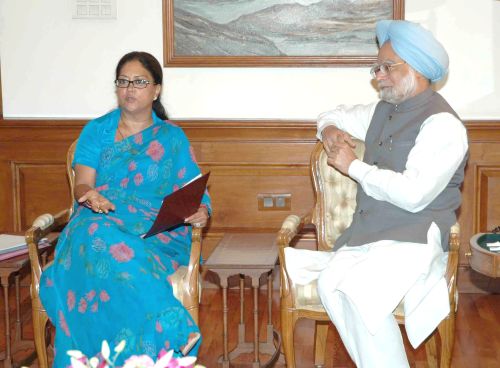
by rakesh | Sep 5, 2006 | Rajasthan
Chief Minister Smt. Vasundhara Raje demanding a “Special Package” for Rajasthan’s Flood Relief with the Prime Minister Dr. Manmohan Singh at New Delhi.
by rakesh | Sep 5, 2006 | Business
Mr. Pradeep Kumar, Senior Vice President, Cranes Software International Ltd., said “This award once again underlines the competence that Cranes has achieved in designing and conceptualizing state of the art products to cater to the needs of engineers and researchers in India and across the globe.”
Dr. Ramdass Keshavamurthy Vice President – Product Development represented Cranes at the grand event to receive the award, said “We are honored to receive this award. This award validates our belief that NISA/CIVIL is one of the few packages which has been designed for the ease of use with the practicing engineers in mind. This award would motivate us to take it further to make it the ultimate tool for the practicing civil engineers for their design and analysis needs”.
NISA/CIVIL offers CAD based solutions to a wide variety of problems encountered in the Analysis and Design of Reinforced Concrete and Steel Structures. Backed by powerful NISA II Analysis and DISPLAY, NISA/CIVIL provides excellent tools for modeling, associating design information and carry out design process in limit state and working stress methodologies of design. Design results are processed to produce structural engineering drawings in AutoCAD™ environment. . A convenient interface to import STAAD™ models into NISA and to export NISA models into STAAD is also provided. NISA/CIVIL is one of the few civil engineering design packages to support the design of irrigation & water retaining structures.
NISA Finite Element Analysis (FEA) software is one of the most advanced engineering analysis tool available for the Automotive, Aerospace, Energy & Power, Oil & Gas, Civil Engineering, Electronic Packaging and Biomedical industry. NISA is an industry leader with proven capabilities in the areas of Stress Analysis, Seismic Analysis, Vibration Analysis, Composite Material Analysis, Motion & Linkage Analysis, Fatigue Analysis, Thermal Analysis, PCB Analysis, Computational Fluid Dynamics, Electromagnetic Analysis and Civil Structure Analysis. It offers a completely integrated pre-post processing environment and seamless interoperability with leading commercial CAD softwares.
by rakesh | Sep 5, 2006 | Rajasthan
05-Sept-2006 Pali, Rajasthan, India Fifteen people including four women and four children killed in a road accident near Pali district of Rajasthan, India. The accident occurred at National Highway No. 14, when A Jeep (RJ19-T-0309) coming from Pali and going to Marwar...
by rakesh | Sep 5, 2006 | India News
The implementation over the years has highlighted the need for a statutory authority with legal backing to ensure tiger conservation. On the basis of the recommendations of National Board for Wild Life, a Task Force was set up to look into the problems of tiger conservation in the country. The recommendations of the Task Force, inter alia include strengthening of Project Tiger by giving it statutory and administrative powers, apart from creating the Wildlife Crime Control Bureau. It has also recommended that an annual report should be submitted to the Central Government for laying in Parliament, so that commitment to Project Tiger is reviewed from time to time, in addition to addressing the concerns of local people.
The National Tiger Conservation Authority would facilitate MoU with States within our federal set up for tiger conservation. It will provide for an oversight by Parliament as well. Further, it will address livelihood interests of local people in areas surrounding Tiger Reserves, apart from ensuring that the rights of Scheduled Tribes and such other people living nearby are not interfered or adversely affected. The core (critical) and buffer (peripheral) areas have been defined, while safeguarding the interests of Scheduled Tribes and such other forest dwellers.
The functions and powers of the Authority, inter alia include : approval of Tiger Conservation Plan prepared by States, laying down normative standards for tiger conservation, providing information on several aspects which include protection, tiger estimation, patrolling, etc., ensuring measures for addressing man-wild animal conflicts and fostering co-existence with local people, preparing annual report for laying before Parliament, constitution of Steering Committee by States, preparation of tiger protection and conservation plans by States, ensuring agricultural, livelihood interests of people living in and around Tiger Reserves, establishing the tiger conservation foundation by States for supporting their development.
The Notification of the National Tiger Conservation Authority has been issued on 4th September 2006, for a period of three years, with the Minister for Environment and Forests as its Chairperson and the Minister of State for Environment and Forests as the Vice-chairperson. The official members include Secretary, Ministry of Environment and Forests, Director General of Forests and Special Secretary, Ministry of Environment and Forests, Secretary, Ministry of Tribal Affairs, Secretary, Ministry of Social Justice and Empowerment, Chairperson, National Commission for the Scheduled Tribes, Chairperson National Commission for the Scheduled Castes, Secretary, Ministry of Panchayati Raj, Director, Wildlife Preservation, Ministry of Environment and Forests and six Chief Wildlife Wardens (in rotation from Tiger Reserve States) (Arunachal Pradesh, Madhya Pradesh, Orissa, Rajasthan, Tamil Nadu and Uttaranchal). Three Members of Parliament would be nominated by the Parliament. The Ministry of Law and Justice would also be nominating an officer. The Ministry of Environment and Forests is in the process of selecting the eight non-official experts or professionals having prescribed qualifications and experience, of which at least two shall be from the field of tribal development. The Inspector General of Forests in charge of Project Tiger shall be the Member Secretary of the Authority.
The Ministry is in the process of creating the Wildlife Crime Control Bureau, invoking the provisions created after the recent amendment. The Bureau would collate intelligence relating to wildlife crime, ensure coordination with State Governments and other Authorities through its set up, apart from developing infrastructure and capacity building for scientific and professional investigation into wildlife crimes and assist the State Governments in successful prosecution of such crimes.
The penalty for an offence relating to the core area of a tiger reserve or hunting in the reserve has been increased. The first conviction in such offence shall be punishable with imprisonment not less than three years but may extend to seven years, and also with fine not less than fifty thousand rupees but may extend to two lakh rupees. The second or subsequent conviction would lead to imprisonment not less than seven years, and also with fine not less than five lakh rupees, which may extend to fifty lakh rupees.
by rakesh | Sep 5, 2006 | Health & Fitness
The results reported today at the British Pharmaceutical Conference in Manchester were from joint research carried out by the Pharmaceutical Sciences Research Division at King’s College London and the School of Natural Product Studies at Jadavpur University, Kolkata, India.
Ayurvedic medicine is a natural healing system that was developed in India centuries ago. It is reputed to have originated from sacred ancient Hindu texts. The Ayurvedic medicine system commonly uses specially selected plants to treat mental decline in the elderly.
In recent years Western medicine has been using a group of drugs called acetylcholinesterase (AChE) inhibitors to improve memory and concentration in people with mild to moderate Alzheimer’s disease.
The UK and Indian researchers tested five plant species1 commonly used in Ayurvedic medicine to see if they did inhibit AChE. The results showed that the plants did have a significant inhibitory effect on AChE.
Pharmacist Professor Peter Houghton who led the research says that the research supports the use of natural products to treat serious illnesses such as Alzheimer’s. “The activities displayed in these five plants are similar to those shown by other plants with a pharmacological use in cognitive decline2,” he says.
Work is now in progress to determine the identity of the compounds responsible for the activity.
Page 20 of 27« First«...192021...»Last »