by rakesh | Jun 26, 2008 | Science & Technology
A new study using this information may solve one of the biggest remaining mysteries in the solar system: why does Mars have two strikingly different kinds of terrain in its northern and southern hemispheres? The huge crater is creating intense scientific interest.
The mystery of the two-faced nature of Mars has perplexed scientists since the first comprehensive images of the surface were beamed home by NASA spacecraft in the 1970s. The main hypotheses have been an ancient impact or some internal process related to the planet’s molten subsurface layers. The impact idea, proposed in 1984, fell into disfavor because the basin’s shape didn’t seem to fit the expected round shape for a crater. The newer data is convincing some experts who doubted the impact scenario.
“We haven’t proved the giant-impact hypothesis, but I think we’ve shifted the tide,” said Jeffrey Andrews-Hanna, a postdoctoral researcher at the Massachusetts Institute of Technology in Cambridge.
Andrews-Hanna and co-authors Maria Zuber of MIT and Bruce Banerdt of NASA’s Jet Propulsion Laboratory in Pasadena, Calif., report the new findings in the journal Nature this week. Artist concept of the Mars Global Surveyor.
A giant northern basin that covers about 40 percent of Mars’ surface, sometimes called the Borealis basin, is the remains of a colossal impact early in the solar system’s formation, the new analysis suggests. At 5,300 miles across, it is about four times wider than the next-biggest impact basin known, the Hellas basin on southern Mars. An accompanying report calculates that the impacting object that produced the Borealis basin must have been about 1,200 miles across. That’s larger than Pluto.
“This is an impressive result that has implications not only for the evolution of early Mars, but also for early Earth’s formation,” said Michael Meyer, the Mars chief scientist at NASA Headquarters in Washington.
This northern-hemisphere basin on Mars is one of the smoothest surfaces found in the solar system. The southern hemisphere is high, rough, heavily cratered terrain, which ranges from 2.5 to 5 miles higher in elevation than the basin floor.
Other giant impact basins have been discovered that are elliptical rather than circular. But it took a complex analysis of the Martian surface from NASA’s two Mars orbiters to reveal the clear elliptical shape of Borealis basin, which is consistent with being an impact crater.
One complicating factor in revealing the elliptical shape of the basin was that after the time of the impact, which must have been at least 3.9 billion years ago, giant volcanoes formed along one part of the basin rim and created a huge region of high, rough terrain that obscures the basin’s outlines. It took a combination of gravity data, which tend to reveal underlying structure, with data on current surface elevations to reconstruct a map of Mars elevations as they existed before the volcanoes erupted.
“In addition to the elliptical boundary of the basin, there are signs of a possible second, outer ring – a typical characteristic of large impact basins,” Banerdt said.
by rakesh | Jun 19, 2008 | Entertainment
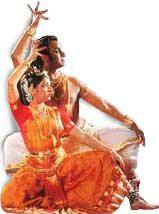
This is a unique convention in that Guinness Book of World Records is sending a delegation to record the event. Over 2500 dancers will perform ballet on the largest stage ever.
This massive convention will be attended by about 2,500 performers flying into California from different parts of the world — Russia, Europe, Australia, Singapore, most states of the US and India. The objective of the convention is to enable Kuchipudi dance form to get an international status and introduce Kuchipudi stalwarts from India on a single platform.
[img align=left]http://citynews.co.in/uploads/img485a777409fc1.jpg[/img]
The inauguration will be marked by a carnival, “Kuchipudi Shobha Yatra,” in the streets of Cupertino to be led by its Mayor Dolly Saldoval, with several festive statues brought from Kuchipudi village. Several senators, mayors, and members of Congress will also participate.
In reverence to the “teacher-disciple” tradition followed in imparting the Kuchipudi dance form, the first day will be marked by “Guru Pujotsavam (honoring teachers),” where renowned Kuchipudi exponents like Pasumarthi Gopalakrishna, Vempati Chinasatyam and Vedanta Satyanarayana Sharma will be honored.
Registration counters located at De Anza College will open on June 20th, marking the grand opening of the event. More information about the event can be obtained at the website http://kuchipudi.siliconandhra.org/.
by rakesh | Jun 19, 2008 | Business
Brazil, Russia, India and China-collectively known as BRIC — represent the next great growth curve for both the mobile and interactive marketing industries. Home to over 40% of the world’s population, the BRIC countries form the core of an emergent global middle class that will number over 1 billion people by 2015. eMarketer projects that the BRIC countries will account for over 1.7 billion mobile phone subscribers by 2012 and expects over 680 million subscribers to access the mobile Internet.
Mobile Usage Metrics for BRIC, 2012 (millions and % penetration)
http://www.emarketer.com/images/chart_gifs/095001-096000/095344.gif
Mobile will be the primary interactive screen for this new generation of consumers, and no major advertising agency can pitch a global brand without referencing its BRIC assets and capabilities, especially those in China and India. Likewise, the largest global telecommunications companies have bet a large amount of their future growth on sales to BRIC-based mobile operators.
“Mobile is the Internet for an increasingly large and attractive consumer segment — an important distinction for marketers to keep in mind,” said John du Pre Gauntt, senior analyst and author of the new report, “Mobile BRIC: Extreme Growth Ahead.”
“As these huge populations within BRIC accumulate disposable income, they are poised to form interactive relationships with local and global brands primarily through the mobile phone,” he added. “With PC and broadband penetration far below that of mobile, marketers and mobile operators find themselves in uncharted territory.”
Five of the world’s 10 largest cities are located in BRIC, along with four of the five top markets for new mobile subscribers. Rapid growth in entertainment and media consumption in the BRIC countries is important for marketers looking to interact with mobile consumers.
BRIC countries also have extremely high levels of prepaid mobile service — often more than 75% of the entire mobile customer base. As a result, there are far more opportunities for marketers to subsidize or sponsor part of basic mobile services such as voice minutes, text messages and even some mobile Internet access.
Even in 2008, the rate of mobile Internet use in the BRIC countries is either comparable to or above that of the US and Western Europe. For many of these markets, debates over whether mobile is an extension of or a substitute for the Web have little relevance — the mobile phone is the Web for millions, and soon hundreds of millions, of people.
by rakesh | Mar 30, 2008 | Business
(i) ITR-1 – For Individuals having salary and interest income and no other income.
(ii) ITR-2 – For Individuals and HUFs, having income from any source except from business or profession.
(iii) ITR-3 – For Individuals and HUFs being partners in firms and not having proprietory business or profession.
(iv) ITR-4 – For Individuals and HUFs having proprietory business or profession.
(v) ITR-5 – Combined Form For return of income and fringe benefits for Firms/AOP/BOI.
(vi) ITR-6 – Combined Form for return of income and fringe benefits for Companies.
(vii) ITR-7 – Combined Form for return of income and fringe benefits for Charitable / religious trusts, political parties and other non- profit organizations.
(viii) ITR-8 – Stand alone form for return of fringe benefits for persons who are not liable to file return of income but are liable to file return of fringe benefits
The return of income has to be filed by using the applicable form without any annexure (except for Form ITR-7) so as to facilitate electronic filing.
E-filing initiative of the Department has been received well and for Assessment Year 2007-08 over 20 lakh E- Returns have been filed, out of which more than 64% E-
Returns have been filed voluntarily by the tax payers. In terms of the taxes paid, these returns account for over 65% of total taxes collected.
Electronic filing of returns for assessment year 2008-09 is compulsory for corporate tax-payers and for firms liable to tax audit u/s 44AB. These tax-payers may either file their return electronically under digital signature or may transmit the data of the return electronically and thereafter submit a one page verification Form which contains a summary of the return transmitted electronically.
All other categories of taxpayers (other than charitable trusts, institutions, etc.) will have the option to file the return in a paper form or electronically, as mentioned above, or in a bar-coded return form.
The new forms will be available on the Income Tax Department’s website http://www.incometaxindiaefiling.gov.in .The Government would urge taxpayers to use the e-filing option, since it will help the Department to serve them better.
SK/LK/30.3.08
by rakesh | Feb 25, 2008 | Rajasthan
– Revenue Surplus for the second consecutive year. Fiscal deficit reduced
– Equal emphasis on physical and social infrastructure of the state
– Focus on education, health and women’s development
– All inter-state border check posts to be abolished from May 1, 2008
– 50 % reservation for women in all Panchayati Raj institutions
– Minimum wages for unskilled, semi skilled and skilled workers raised by one third.
The Chief Minister of Rajasthan, Smt Vasundhara Raje, who also holds the finance portfolio, today presented an upbeat budget for Rajasthan for the year 2008-2009.
It is noteworthy that Smt Raje presented the state budget ahead of the Union Budget, underlining the strong fiscal performance of the state. Speaking on the occasion, Chief Minister, said, “In four years, our Government has significantly enhanced the physical and social infrastructure of Rajasthan. This year we intend to not just consolidate the progress we have made in the last four years but also set the pace for all-round development. We are proud to present an inclusive budget which provides a fillip to industry while taking due care of the economically weaker sections of the society.”
The highlights of the budget include approved plan expenditure for 2008-09 of Rs 15,248 crore, an estimated revenue surplus of Rs 1,183.14 crore (3.59% of revenue receipts) and fiscal deficit of Rs 5,266.91 crore (3% of GSDP).
Complimenting the state for its excellent performance, the CAG report for the year 2006-07 had recently noted that the state had achieved fiscal targets as laid down in the FRBM Act well before the timeline. The current year has ended in a revenue surplus of Rs 638 crore and fiscal deficit of Rs 3,970 crore which is 2.8% of the Gross State Domestic Product (GSDP).
The key highlights of the budget for various sectors are as follows:-
Roads
. The target of rural connectivity under Bharat Nirman Yojana has been achieved one year in advance, making Rajasthan first such state in the country. Rural connectivity increased to 73%, higher than the national average of 65 %
. 9,096 panchayat headquarters out of total 9,188 gram panchayat headquarters connected with pucca roads.
Power
. Outlay for power section sector in 2008-09 at Rs 6,212 crore which is 40.74% of total plan.
. Installed power capacity raised to 6,395 MW and to further increase by 2,019 MW by the end of the current financial year.
. 4,916 feeders completed under the ‘feeder renovation programme’ leading to reduction of Transmission & Distribution losses by 9.37%.
. Focus on domestic electrification projects in rural areas.
Water resources
. Rs 50 crore provided for upkeep of old irrigation projects in 2008-09.
. Irrigation capacity exceeding one lakh hectares per year created in the last four years. A master plan will be prepared for an optimum utilization of available water which will provide irrigation for one lakh additional hectares.
Industry
. In an attempt to give a boost to the free movement of goods across the country, all inter-state border check posts to be abolished from May 1, 2008
. Budget of Rajasthan Mission on Livelihood raised from Rs 20.80 crore in 2004 to Rs 60 crore. Over one lakh youths equipped with employable skills.
. Four more animation academies to be established along with the academies of automotive design, draftsmanship and graphic design in 2008-09.
. Investment proposal exceeding Rs 500 crore in districts having no big projects will get customized package.
Medical & Health
. Medical facilities to be strengthened- Capacity expansion, new hospitals, new facilities in existing hospitals to be established
. Health Insurance schemes to be launched in all 33 districts of Rajasthan
Agriculture
. Additional state subsidy of 10-20% for drip irrigation schemes.
. Rajasthan Mission on Animal Husbandry has been established.
Women
. The reservation for women in all Panchayati Raj institutions will be increased from 33% earlier to 50 %.
. The budget has led to strengthening of various social schemes for women, BPL families, rural and urban development.
. All girls completing necessary agricultural education will be appointed as Agricultural Supervisors.
. Women’s hockey academy to be established in Ajmer next year.
Economically backward classes
. Launched the largest financial inclusion scheme connected to health insurance for all BPL families in the state – a novel scheme in which Rs 1,500 will be given to all the families covered under the health insurance scheme upon opening a bank account enabled with a smart card in the name of the female member of the family. This scheme will draw women across the state into the formal financial system and ensure they have access to credit, bank loans, etc. The scheme will be extended to groups like SCs, ST’s and farmers.
. The minimum wages for unskilled workers raised from Rs 73 to Rs 100.
. Honorarium of aanganwadi workers raised from Rs 1,000 to Rs 1,600, Rs 500 to Rs 1,000 for saathins and Rs 500 to Rs 800 for sahayikas.
Human Resources Development
. All government schools whose students get selected in the National Talent Scholarship Scheme will be awarded a prize of Rs 50,000 per student.
Taxes
. Simplification of tax procedures – computerization of commercial taxes department is underway. E-filing has been introduced since January 2008. E-refund to be available from August 2008.
. Harmonized system of nomenclature (HSN), followed worldwide as a standard, will be introduced for the betterment of the VAT system.
Page 12 of 53« First«...111213...»Last »